Client Record Book Editable KDP Interior Template
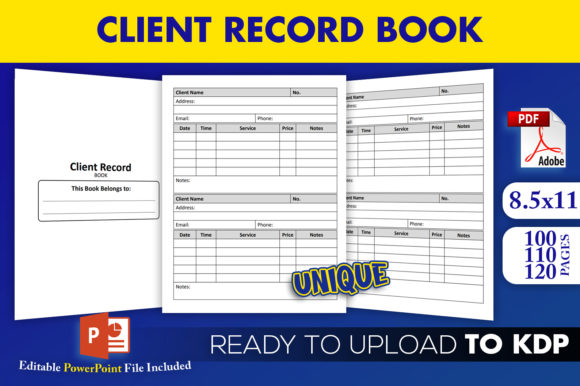
Creating a functional and aesthetically pleasing low-content book requires more than just blank lines; it demands a layout that understands the end user's workflow. The Client Record Book Editable KDP Interior is designed specifically for professionals who need to track interactions, manage appointments, and maintain detailed client histories without the friction of a poorly structured notebook. This template bridges the gap between digital convenience and physical utility, offering a clean, organized system that translates perfectly from screen to print. Whether you are publishing under your own imprint or creating a branded resource for your business, this interior provides the structural foundation necessary for a high-quality product.
The visual personality of this interior leans toward modern professionalism with a touch of approachable minimalism. It avoids the cluttered aesthetic that often plagues generic planners, opting instead for generous whitespace and clear typographic hierarchy. This design choice is intentional. In editorial design and functional publishing, readability is paramount. When a user is quickly jotting down notes during a consultation or reviewing past records, their eye needs to travel effortlessly across the page. The layout utilizes a balanced mix of sans serif fonts for headers and labels to ensure legibility at small point sizes, while providing ample writing space that respects the natural flow of handwriting. This attention to detail elevates the perceived value of the final printed book, distinguishing it from lower-quality competitors in the marketplace.
Strategic Applications Across Niches and Professions
Versatility is a key strength of this Client Record Book Editable KDP Interior. While the name suggests a singular purpose, the underlying grid and field structures adapt seamlessly to various professional contexts. For beauty professionals like estheticians, lash technicians, and hair stylists, the fields serve as perfect intake forms and service logs. Real estate agents can utilize the pages to track property showings, client preferences, and follow-up dates. Health coaches and personal trainers will find the structure ideal for monitoring progress, dietary notes, and session feedback. Even creative freelancers, such as photographers or graphic designers, can repurpose the layout to manage project briefs and revision histories.
From a branding perspective, this template supports consistency across physical touchpoints. If you are a small business owner creating internal tools or client-facing resources, using a cohesive interior reinforces your brand identity. The neutral yet polished style acts as a canvas that doesn't compete with your cover design or logo. This is particularly important for publishers building a series of related journals or planners. By maintaining a consistent interior architecture, you create a recognizable product line that encourages repeat purchases. The template’s flexibility allows you to serve multiple sub-niches within the broader "client management" category without needing to design unique interiors from scratch for every single variation.
Typography and Layout Influence on User Experience
The success of any functional notebook hinges on how well the typography serves the content. In this editable interior, font selection goes beyond mere decoration; it dictates usability. The use of clean, modern typography ensures that prompts and section titles remain distinct from the user's handwritten entries. This visual separation reduces cognitive load, allowing the user to focus on data entry rather than deciphering the page structure. Good typeface choices in low-content books also signal quality. A premium font pairing suggests that the publisher cares about the details, which directly influences customer reviews and perceived value.
Visual hierarchy plays an equally critical role. The layout employs varying line weights and spacing to guide the eye through the record-keeping process logically. Important fields are emphasized without being overwhelming, while secondary information recedes appropriately. This thoughtful arrangement prevents the page from feeling dense or intimidating. For KDP publishers, understanding these principles helps in marketing the book effectively. You aren't just selling paper; you are selling an organized experience. When potential buyers look at the "Look Inside" feature on Amazon, they should immediately understand how the book works and feel confident that it will meet their organizational needs. The high-resolution nature of these files ensures that even fine lines and subtle typographic nuances print crisply, avoiding the muddy greys that can ruin a professional appearance.
Customization and Technical Specifications for KDP
One of the most significant advantages of this package is the inclusion of the editable PowerPoint (PPTX) source file. Unlike static PDFs that lock you into a specific configuration, the PPTX format empowers you to tailor the Client Record Book Editable KDP Interior to precise market demands. You can easily adjust field labels, modify column widths, add your logo to the footer, or change the header font to match a specific niche requirement. This level of customization is essential for standing out in a saturated market. Perhaps you want to create a version specifically for dog groomers; you can simply rename "Client Name" to "Pet Name" and "Service" to "Grooming Package" in minutes.
The technical readiness of these files removes much of the anxiety associated with self-publishing. The package includes three pre-sized PDF options: 100, 110, and 120 pages. All are formatted to the standard 8.5×11 trim size, which remains the most popular dimension for professional record books due to its ample writing surface. Crucially, these files have been tested on KDP to ensure margins, bleed settings, and resolution meet platform standards. This testing phase saves you from costly proofing errors and rejected uploads. The high-resolution output guarantees that whether you are printing via KDP or taking the files to a local commercial printer for a bulk order, the results will be sharp and professional.
Evaluating Fit and Ensuring Commercial Viability
Before finalizing your project, take time to evaluate if this specific interior aligns with your target audience's actual behaviors. Download the preview or test print a few pages to assess the writing space physically. Does the line height accommodate larger handwriting? Are the input fields wide enough for detailed notes but narrow enough to encourage concise data entry? These practical considerations determine whether a customer buys once or becomes a loyal advocate. Testing font pairings is also wise if you plan to heavily customize the source file. Ensure that any new display font or script font you introduce for branding purposes maintains sufficient contrast and readability against the functional elements of the page.
Commercial licensing and usage rights should always be top of mind. This template is designed for commercial use, allowing you to publish unlimited copies on KDP or other platforms. However, true value comes from transformation. Rather than uploading the file exactly as-is, leverage the editable source to create unique derivatives. Add niche-specific checklists, incorporate educational content relevant to the profession, or design custom divider tabs. These modifications not only protect you from duplicate content issues but also significantly enhance the utility of the book. By treating the Client Record Book Editable KDP Interior as a foundational asset rather than a finished product, you maximize both your creative potential and your return on investment in the competitive low-content publishing landscape.