KDP Interior Lined Journal: A Practical 6x9 Resource for Self-Publishers
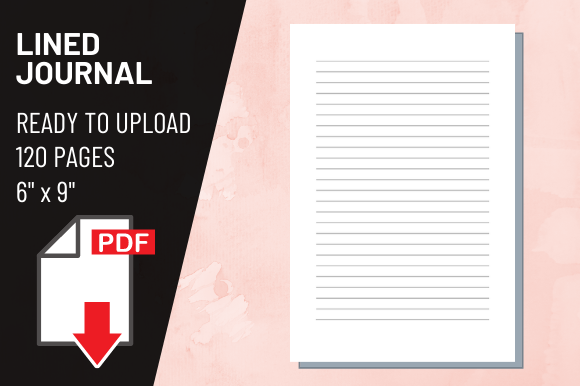
The landscape of self-publishing has shifted dramatically in recent years, moving from complex offset printing requirements to accessible print-on-demand models. At the heart of this shift for low-content creators is the KDP Interior Lined Journal. For authors, entrepreneurs, and designers looking to expand their catalog without spending weeks on formatting, a pre-formatted interior serves as the foundational building block of a successful publishing business. Specifically, the 6″ x 9″ lined journal KDP interior has emerged as the industry standard due to its versatility, portability, and universal appeal across multiple niches.
Understanding the technical specifications and practical applications of these interiors is essential for anyone serious about Amazon KDP. This guide explores the nuances of using a ready-to-upload PDF file, the importance of resolution and bleed settings, and how to leverage a 120-page layout to create value for end-users. Whether you are creating a gratitude diary, a meeting notebook, or a creative writing prompt book, the quality of your interior dictates the customer experience.
The Strategic Value of the 6x9 Trim Size
While KDP offers numerous trim sizes ranging from pocket-sized to large-format workbooks, the 6″ x 9″ dimension remains the most commercially viable for lined journals. This size strikes an optimal balance between portability and usability. It is compact enough to fit in a standard handbag, backpack, or briefcase, yet it offers sufficient surface area for comfortable handwriting. When selecting a lined journal KDP interior, choosing this specific trim size aligns your product with consumer expectations for trade paperbacks and personal notebooks.
From a production standpoint, 6x9 is highly efficient. It minimizes paper waste during the printing process and often results in lower printing costs compared to larger formats. For the publisher, this means better royalty margins or more competitive pricing strategies. Furthermore, because this size is ubiquitous, customers already own bookshelves, organizers, and covers designed specifically for it. By adhering to this standard, you reduce friction in the purchasing decision-making process.
Technical Specifications: Resolution and File Integrity
A common pitfall for new publishers is underestimating the importance of file quality. The package described here includes a high-quality PDF file at 300 dpi (dots per inch). This specification is non-negotiable for professional printing. While screens display images clearly at 72 or 96 dpi, commercial printers require 300 dpi to render crisp, sharp lines without pixelation or blurring.
When a user receives a physical book with fuzzy or jagged lines, it immediately devalues the perceived quality of the brand. A 300 dpi PDF ensures that every rule line, margin marker, and header appears exactly as intended. Additionally, the file format matters. PDF is the preferred standard for KDP because it locks in fonts, spacing, and layout dimensions. Unlike Word documents, which can reflow text or shift margins when opened on different devices, a PDF guarantees that the KDP Interior Lined Journal you see on your screen is identical to what the printer produces.
Understanding No-Bleed Interiors
One of the most critical distinctions in KDP formatting is the difference between bleed and no-bleed files. This specific 120-page package is formatted as no bleed. In printing terminology, "bleed" refers to content that extends beyond the edge of the page, requiring the printer to trim the excess. "No bleed" means all content, including lines and borders, stays within the safe zone, leaving a consistent white margin around the entire page.
For lined journals, no-bleed is often the superior choice for several reasons:
- Safety Margins: It accounts for slight mechanical shifts during the binding and trimming process, ensuring no lines are accidentally cut off.
- Writing Comfort: It provides a natural gutter and outer margin, preventing users from having to write into the spine crease or off the edge of the paper.
- Cover Compatibility: No-bleed interiors are generally more forgiving when matching with various cover designs, reducing alignment errors.
Publishers must understand that uploading a no-bleed file requires selecting the correct option in the KDP dashboard. Mismatching a no-bleed PDF with a bleed setting can result in rejected files or improperly scaled pages. Always verify that your interior settings match the file specifications before hitting publish.
Optimizing the 120-Page Count
Page count influences both the perceived value and the physical feel of the journal. A 120-page length is strategically positioned in the market. It is substantial enough to feel like a durable tool rather than a disposable pamphlet, yet thin enough to remain lightweight and flexible. Thicker journals (200+ pages) can sometimes be intimidating to users or difficult to carry daily, while thinner ones (under 80 pages) may not justify a premium price point.
With 120 pages, you offer approximately three to four months of daily use or ample space for project-specific documentation. This volume allows for flexibility in niche targeting. For example, a "90-Day Goal Tracker" fits perfectly within this constraint, as does a semester-long academic notebook. When utilizing a lined journal KDP interior of this length, consider adding front matter such as a title page, index, or instruction sheet to maximize utility without altering the core lined template.
Real-World Applications and Niche Adaptation
The beauty of a standardized KDP Interior Lined Journal lies in its adaptability. The lines themselves are neutral; the value comes from how you position the product through your cover design, title, and description. Here are practical scenarios where this specific interior excels:
- Professional Meeting Notes: Corporate professionals prefer clean, unbranded interiors for confidentiality and focus. A simple 6x9 lined journal serves as an executive notebook for board meetings, client calls, and brainstorming sessions.
- Educational Composition Books: Students require durable, standardized notebooks for language arts, science labs, and history classes. The 6x9 size fits easily into lockers and backpacks alongside textbooks.
- Therapy and Mindfulness: Journaling is a cornerstone of cognitive behavioral therapy and mindfulness practices. A structured yet open lined space allows for free-writing exercises, dream logging, and emotional processing without the pressure of blank pages.
- Creative Writing and Scripting: Novelists and screenwriters often use physical notebooks to disconnect from digital distractions. The consistent line spacing aids in drafting dialogue and plotting scenes manually.
By identifying a specific audience within these categories, you transform a generic commodity into a targeted solution. The interior remains the same, but the marketing message changes to address specific pain points and desires.
Evaluating Suitability for Your Publishing Goals
Before integrating this asset into your workflow, assess whether it aligns with your current objectives. A pre-made 6″ x 9″ PDF is ideal for publishers who prioritize speed-to-market and consistency. If you plan to build a series of related journals, using the same interior template creates brand cohesion and reduces repetitive design work.
However, there are considerations to keep in mind. Because this is a standard template, differentiation must occur externally. You cannot rely on unique interior features to stand out; your cover art, keyword research, and category selection become the primary drivers of discovery. Additionally, ensure that the line spacing (typically college rule or wide rule) matches your target demographic’s needs. Academic markets often prefer college rule, while general consumers and those with larger handwriting may favor wide rule. Verify the specific spacing of your PDF file before finalizing your niche strategy.
Best Practices for Upload and Quality Assurance
Even with a ready-to-upload file, diligence is required to ensure a flawless product. Follow this checklist when preparing your lined journal KDP interior:
- Verify Dimensions: Open the PDF properties to confirm the document size is exactly 6.00" x 9.00". Even a fraction of an inch difference can cause upload errors.
- Check Margins: Ensure the inside (gutter) margin is adequate for the page count. For 120 pages, a minimum gutter of 0.375" is typically recommended to prevent text from falling into the binding.
- Preview Thoroughly: Use KDP’s online previewer to flip through every section. Look for any unexpected artifacts, alignment issues, or metadata problems.
- Order a Proof: Never skip the physical proof copy. Colors, paper texture, and binding tightness can only be truly evaluated in person. This step validates that the 300 dpi resolution translates correctly to print.
Taking these extra steps protects your reputation and reduces returns. Customers appreciate attention to detail, and a professionally executed journal encourages repeat purchases and positive reviews.
Moving Forward with Confidence
The KDP Interior Lined Journal represents more than just a digital file; it is a vehicle for creativity, organization, and business growth. By leveraging a high-quality, 300 dpi, no-bleed 6x9 template, publishers can bypass technical hurdles and focus on what truly matters: connecting with readers and serving specific communities. Whether you are expanding an existing brand or launching your first low-content book, understanding the fundamentals of this essential asset sets the stage for sustainable success in the evolving world of self-publishing.
Remember that the tool itself is neutral. Its effectiveness depends entirely on your strategic application, market research, and commitment to quality. With the right approach, a simple lined journal can become a valuable resource for thousands of users seeking clarity, organization, and creative expression in their daily lives.