Evaluating 200 Sudoku Puzzles for Kids 6x6 Vol.9
Selecting appropriate cognitive activities for children requires balancing engagement with educational value. 200 Sudoku Puzzles for Kids 6x6 Vol.9 presents a specific solution within the printable puzzle market, targeting early elementary learners through a modified grid structure. This resource is designed as a digital PDF download rather than a physical book, offering immediate access for parents and educators who prefer to manage printing logistics independently. Understanding the specific parameters of this volume is essential for determining whether it aligns with a child’s current developmental stage and learning objectives.
Understanding the 6x6 Grid Format
The primary distinction of this volume is the use of a 6x6 grid instead of the traditional 9x9 format. Standard Sudoku can be overwhelming for children aged five to eight due to the high cognitive load required to track nine distinct variables across rows, columns, and subgrids. The 6x6 variation reduces this complexity by utilizing only six symbols or numbers and dividing the board into smaller 2x3 or 3x2 rectangular regions.
This reduction in scale serves a functional purpose beyond mere simplification. It allows young solvers to practice the core logic of Sudoku—elimination and pattern recognition—without experiencing frustration fatigue. For evaluators comparing resources, it is important to note that 6x6 puzzles act as a bridge between basic matching games and full-scale logic puzzles. They maintain the structural integrity of Sudoku while adjusting the working memory requirements to match early childhood cognitive capacities.
Volume Structure and Layout Efficiency
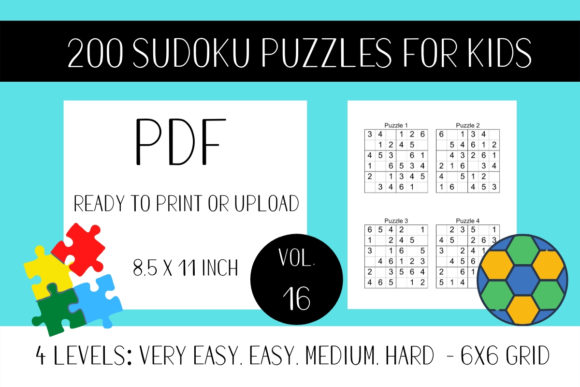
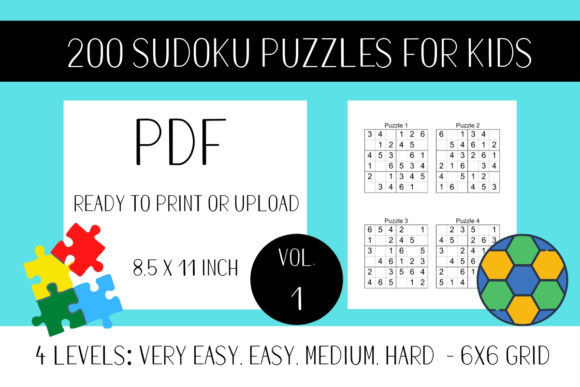
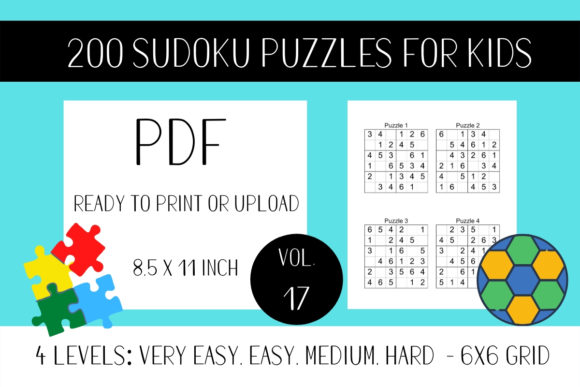
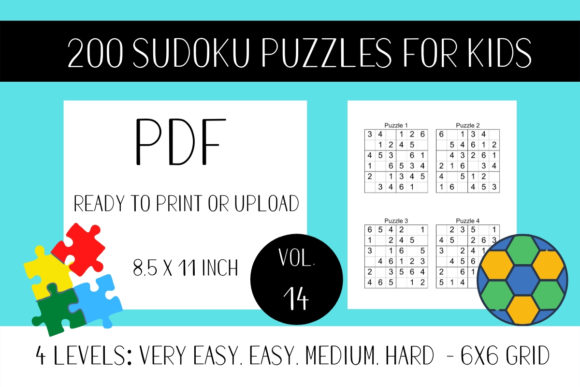
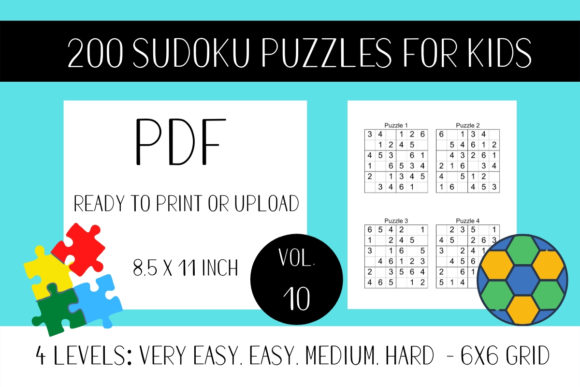
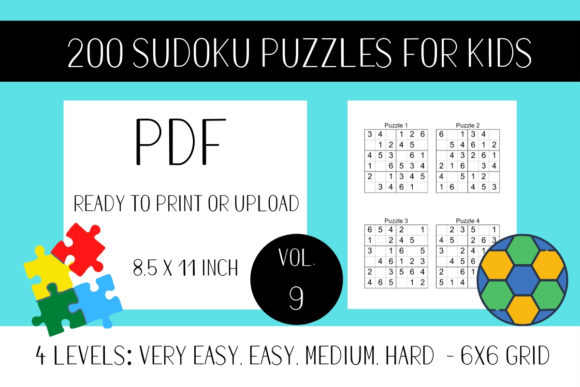
200 Sudoku Puzzles for Kids 6x6 Vol.9 contains 84 pages formatted for standard 8.5″ x 11″ paper. The layout density is a significant factor for users prioritizing cost-efficiency and paper conservation. Each page features four puzzles, maximizing the utility of every printed sheet. This high-density arrangement differs from many commercial puzzle books that utilize one large puzzle per page to accommodate younger eyes or larger motor skills.
The answer key organization also reflects this efficiency model. Rather than dedicating separate pages to solutions, the product includes six sudoku answers per page. This compact answer key design facilitates quick verification without excessive scrolling or page flipping in the digital file. However, users should evaluate whether this smaller print size for both puzzles and answers is suitable for their specific printing setup and the visual acuity of the intended user. While efficient, the four-puzzle-per-page layout leaves limited margin space for notes or doodling, which some children utilize as part of their solving process.
Navigating Difficulty Progression
A critical component of any educational puzzle series is the scaffolding of difficulty. This volume incorporates four distinct difficulty levels, providing a structured progression path. When evaluating this resource, consider how these levels are implemented. Effective progression in 6x6 Sudoku typically involves manipulating the number of pre-filled cells and the complexity of the logical steps required to deduce missing numbers.
- Level 1: Typically features more given numbers, allowing children to solve through simple scanning and direct elimination.
- Level 2: Reduces givens slightly, requiring the solver to hold one or two possibilities in working memory.
- Level 3: Introduces intermediate logic where single-row or column scanning is insufficient, necessitating cross-referencing between regions.
- Level 4: Challenges the learner with fewer starting clues, demanding sustained focus and multi-step deduction appropriate for advanced beginners.
For parents and teachers, this tiered system supports differentiated instruction. A single PDF file can serve multiple students at different skill levels, or support one student over several months of development. However, because this is a digital product, the user must manually curate the experience by selecting which pages to print based on the child's current proficiency.
Benefits of the Digital PDF Format
The decision to purchase a ready-to-print PDF rather than a bound book offers specific advantages and tradeoffs. The primary benefit is repeatability. If a child struggles with a specific difficulty level or wishes to revisit a favorite puzzle type, the relevant pages can be reprinted indefinitely. This is particularly valuable for educators managing classrooms or homeschool environments where consumable workbooks represent a recurring expense.
Additionally, the digital format allows for customization. Users can adjust printer settings to scale the content up or down, print on colored paper to increase engagement, or bind the pages according to personal preference. The immediate availability eliminates shipping wait times, making it a practical choice for last-minute lesson planning or travel preparation. The file serves as a permanent library asset rather than a disposable commodity.
Considerations and Potential Tradeoffs
While the format offers flexibility, it also shifts the burden of production to the buyer. Evaluators must account for the ongoing cost of ink and paper. Printing 84 pages with four puzzles each consumes significant toner, especially if high-quality settings are used to ensure crisp lines. Users without reliable home printing capabilities may find that professional printing services negate the cost savings compared to purchasing a pre-bound paperback.
Furthermore, the lack of physical binding means the user is responsible for organization. Without a cover or spine, loose sheets can easily become disordered. Parents may need to invest in folders, binders, or stapling to create a cohesive user experience. There is also the consideration of screen time versus tactile interaction; while the solving process is analog, the selection and management process remains digital. For families strictly limiting digital device association with leisure activities, the setup phase may introduce unwanted friction.
Determining Fit: When to Choose This Resource
200 Sudoku Puzzles for Kids 6x6 Vol.9 is likely a strong fit for specific scenarios. It is ideal for homeschoolers seeking supplementary logic curriculum that can be integrated into daily routines without consuming excessive storage space. It suits parents who want to test their child’s interest in Sudoku before committing to expensive subscription services or premium boxed sets. The 6x6 format specifically targets the transitional age group (approximately ages 5–8) that has outgrown picture puzzles but is not yet ready for adult-level logic challenges.
Conversely, alternatives may be worth considering in other contexts. If the goal is to provide a screen-free gift that feels substantial and special, a professionally bound book with glossy covers and themed illustrations may offer better perceived value. If the child has already mastered 6x6 grids, this volume will not provide adequate challenge, and a 9x6 or standard 9x6 resource would be more appropriate. Additionally, for users who dislike assembling materials or lack printing infrastructure, a physical workbook remains the superior logistical choice despite the higher upfront cost and lack of reprintability.
Practical Decision-Making Insights
When finalizing a decision, prospective buyers should assess their printing environment and the child’s attention span. The four-puzzles-per-page layout is excellent for short, focused sessions but may appear dense to children accustomed to larger, illustrated layouts. Reviewing sample pages, if available, is recommended to verify that the font size and grid spacing meet accessibility needs.
Ultimately, this volume represents a utilitarian approach to cognitive development. It prioritizes volume, variety, and flexibility over aesthetic polish. For users who view Sudoku as a regular mental exercise rather than an occasional novelty, the digital format and progressive difficulty structure of 200 Sudoku Puzzles for Kids 6x6 Vol.9 provide a sustainable, long-term resource. Success depends less on the product itself and more on the user’s willingness to manage the printing and curation process effectively.