Financial Monthly Budget Planner KDP: Integrating Editable Assets into Your Publishing Workflow
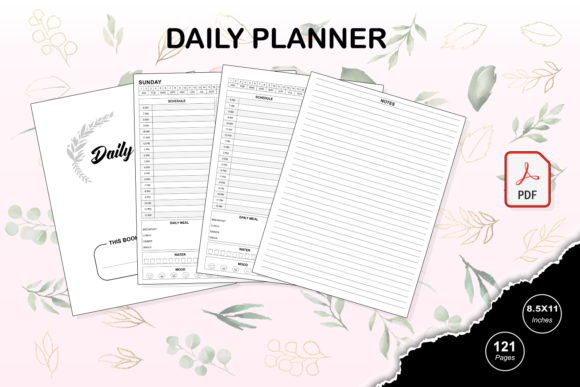
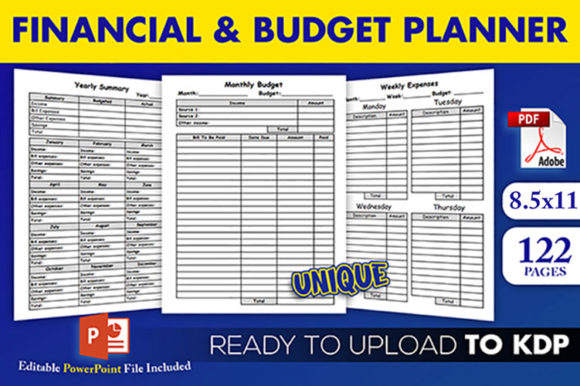
Creating a successful low-content or medium-content book on Amazon requires more than just uploading a generic template. It demands a strategic approach to asset management, quality assurance, and product differentiation. The Financial Monthly Budget Planner KDP resource serves as a foundational component in this ecosystem, specifically designed for publishers who need a reliable, tested, and customizable interior. Unlike static PDF templates that lock you into a single design, this package provides a fully editable PowerPoint (PPTX) source file alongside a print-ready PDF. This dual-format delivery changes the workflow from simple replication to active product development, allowing creators to adapt the 122-page interior to specific niches, branding requirements, or seasonal updates without starting from scratch.
For professionals, freelancers, and small business owners entering the publishing space, time is often the most constrained resource. The value of this planner lies in its pre-validated technical specifications. With a trim size of 8.5×11 inches and high-resolution interiors already tested on KDP, the asset eliminates the most common friction points in self-publishing: margin errors, bleed issues, and resolution warnings. By integrating this tested file into your production pipeline, you shift your focus from troubleshooting formatting errors to marketing strategy and niche research. The planner acts not merely as a product to sell, but as a standardized module within a larger publishing operation.
Pre-Launch Preparation and Niche Adaptation
Before listing any financial planner, effective publishers conduct market research to identify gaps in current offerings. The editable PPTX source file is critical during this preparation phase. While the included PDF is ready for immediate upload, the true utility emerges when you modify the source to match specific user personas. A budget planner for college students requires different categories and language than one designed for real estate investors or freelance graphic designers. Using the PowerPoint file, you can adjust headers, modify expense tracking tables, and insert niche-specific motivational content or instructional pages.
This adaptation process should be systematic. Start by duplicating the master PPTX file to preserve the original tested version. From there, implement changes based on keyword research and competitor analysis. Because the file is high-resolution and structured for 8.5×11 printing, you can add custom graphics, logos, or branded color accents without worrying about degrading print quality. This level of customization transforms a generic financial tool into a targeted solution, which is essential for standing out in a saturated marketplace. The ability to edit ensures that your product remains relevant even as financial trends or user preferences evolve over time.
Technical Integration and Quality Control
One of the primary risks in KDP publishing is rejection due to formatting violations. This Financial Monthly Budget Planner KDP asset mitigates that risk through pre-testing, but proper integration still requires a verification workflow. Even though the PDF is labeled as tested, best practices dictate running a final check through the KDP Previewer tool after any modifications. When working with the editable source file, ensure that your slide size settings remain locked at 8.5×11 inches. Accidental resizing during editing can shift margins and render the file unusable.
Quality control extends beyond dimensions. High-resolution interiors are necessary for crisp text and clean lines, especially for financial tables where readability is paramount. When exporting your modified PPTX back to PDF for upload, always select "High Quality Print" or "Press Quality" settings. Standard or web-optimized exports often downsample images and text, leading to blurry outputs that result in negative customer reviews. Maintaining the integrity of the original high-resolution assets ensures that the final physical product meets professional standards. For publishers managing multiple titles, establishing a consistent export protocol creates efficiency and reduces the likelihood of version control errors across your catalog.
Workflow Applications Across User Segments
The versatility of this planner asset supports various operational models. For educators and coaches, the editable nature allows for the creation of companion workbooks that align with specific curricula or coaching programs. You can embed lesson references, specific savings challenges, or proprietary financial frameworks directly into the planner pages. This turns a standalone book into an integrated part of a service offering, increasing perceived value and client retention.
Freelancers and agency owners can utilize the planner as a lead magnet or client onboarding tool. By customizing the cover and interior introduction with their branding, they provide a tangible resource that demonstrates expertise. In this context, the KDP platform serves as a fulfillment mechanism, removing the need for inventory management or shipping logistics. The 122-page length provides substantial value without being overwhelming, striking a balance that encourages actual usage rather than shelf abandonment.
For serial publishers and marketers, this asset functions as a scalable base for series development. Financial planning is rarely a one-size-fits-all endeavor. You can create a "Master Budget Planner" using the core PDF, then spin off variations like "Debt Payoff Tracker," "Small Business Expense Log," or "Family Savings Journal" using the editable source. Each variation targets different long-tail keywords while maintaining consistent interior quality and formatting. This modular approach maximizes the return on investment for a single asset, allowing for rapid catalog expansion with minimal additional design time.
Post-Publication Maintenance and Iteration
Financial regulations, tax laws, and economic conditions change regularly. A static PDF becomes outdated quickly, whereas an editable source file supports long-term product viability. Schedule quarterly or annual reviews of your planner listings. Use customer feedback and Q&A sections to identify missing features or confusing layouts. The PPTX file allows you to implement these improvements efficiently. Perhaps users request a dedicated section for cryptocurrency tracking or a simplified weekly expense review; these additions can be made to the source file and re-uploaded as a revised edition.
Maintaining an organized asset library is crucial for this iterative process. Keep clear records of which version of the PPTX corresponds to which live ASIN. Document any global changes made to margins or fonts so that future updates remain consistent. This organizational discipline prevents the confusion that often arises when managing multiple editions or formats. Furthermore, keeping the original tested PDF as a backup ensures you always have a known-good baseline to revert to if experimental edits cause unforeseen formatting issues.
Enhancing Usability and Customer Experience
The ultimate success of a Financial Monthly Budget Planner KDP product depends on end-user satisfaction. The 122-page count offers ample space for comprehensive tracking, but usability hinges on layout logic. When reviewing the editable file, assess the flow from monthly overviews to daily trackers. Are there adequate note-taking spaces? Is the font size legible for writing by hand? These practical considerations differentiate a functional tool from a decorative notebook.
Consider adding value-added pages that guide the user. Instructional spreads explaining how to use the zero-based budgeting method or tips for categorizing variable expenses can significantly enhance the user experience. Since the file is fully editable, you have the freedom to insert these educational elements wherever they fit best in the logical flow. This transforms the planner from a passive recording device into an active financial management system. High-resolution interiors ensure that these instructional texts remain sharp and readable, reinforcing the professional quality of the publication.
Strategic Asset Management for Long-Term Growth
Integrating this planner into your business requires viewing it as a dynamic asset rather than a disposable commodity. The combination of a tested PDF and an editable PPTX provides both immediate deployment capability and long-term flexibility. For entrepreneurs and creators, this duality supports diverse revenue streams—from direct sales to bundled offerings and lead generation tools. The key to maximizing this potential lies in disciplined workflow management: verifying technical specs, adapting content for specific audiences, maintaining version control, and iterating based on real-world feedback.
By treating the Financial Monthly Budget Planner KDP asset as a core component of your publishing infrastructure, you build a foundation for sustainable growth. The initial time invested in understanding the editable features and establishing quality control protocols pays dividends through reduced error rates, faster update cycles, and higher customer satisfaction. Whether you are launching your first title or expanding an existing catalog, this resource provides the structural reliability needed to execute professionally in the competitive self-publishing landscape. Success comes not just from having the file, but from integrating it thoughtfully into a broader process of creation, validation, and continuous improvement.