Kids Letters Numbers Handwriting Pages: A KDP Template
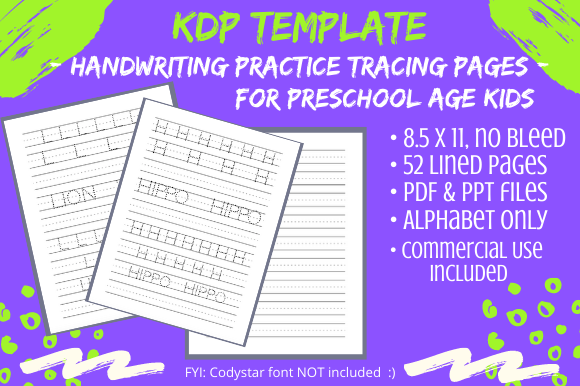
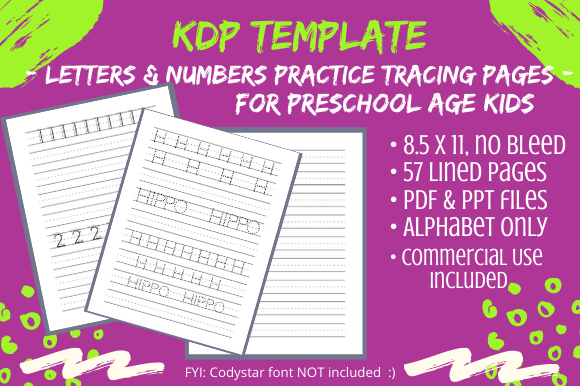
Creating low-content books for Amazon KDP offers a unique opportunity to build passive income streams, but the market for educational materials is increasingly competitive. Success in this niche requires more than just uploading a generic file; it demands a balance of professional structure and personalized creativity. This Kids Letters Numbers Handwriting Pages template provides the essential foundation for pre-school education products, specifically designed for 8.5x11 inch NO-bleed printing. By starting with a professionally formatted interior that includes tracing guides for the alphabet and numbers 0-9, creators can bypass the tedious technical setup and focus entirely on differentiation and value addition.
The core utility of this resource lies in its structural compliance and immediate usability. The included 57-page PDF serves as a print-ready baseline, featuring two dedicated pages for each letter of the alphabet and specific layouts for number practice. However, the inclusion of an editable PPT file transforms this from a static product into a dynamic design asset. For educators, homeschoolers, and KDP publishers, this duality allows for rapid prototyping and customization without requiring advanced graphic design software or expensive subscriptions.
Understanding the Technical Foundation
Before diving into creative modifications, it is vital to understand why the technical specifications of these Kids Letters Numbers Handwriting Pages matter for your final product. The 8.5x11 inch dimension with NO-bleed settings is the industry standard for workbook-style publications. Bleed issues are the most common cause of rejection or poor customer reviews in the low-content category. By utilizing a pre-formatted template where margins and safe zones are already established, you eliminate the risk of content being trimmed during the printing process.
The layout logic is equally intentional. Dedicating two pages per letter allows for a pedagogical progression that single-page layouts often miss. The first page typically focuses on recognition and initial tracing, while the second reinforces muscle memory through repetition. Similarly, placing two numbers per page prevents cognitive overload for early learners. When you adapt this template, maintaining this rhythmic pacing is crucial for user satisfaction. Parents and teachers look for resources that respect the developmental stage of the child, not just pages filled with empty lines.
Strategic Customization for Market Differentiation
The most critical advice for using this digital product is to make it uniquely yours. Amazon’s algorithms and quality guidelines prioritize originality. Simply republishing the provided PDF without modification can lead to visibility issues or account warnings. The editable PPT file is your tool for avoiding this pitfall. Before beginning any edits, always create a duplicate copy of the original files to preserve the master template for future projects.
Differentiation goes beyond changing fonts. Consider how you can restructure the content to serve a specific micro-niche within the pre-school demographic:
- Thematic Integration: Transform generic handwriting practice into a thematic experience. If targeting dinosaur enthusiasts, add subtle dino silhouettes to the corner of pages or rename sections to "T-Rex Tracing." The base tracing lines remain standard, but the context changes entirely.
- Bilingual Adaptation: Use the editable slides to introduce secondary language labels. Adding Spanish, French, or Mandarin translations below the English letters creates a dual-language resource that appeals to multilingual households and immersion programs.
- Skill Stacking: Combine handwriting with other early learning objectives. Rearrange pages to include coloring elements, simple mazes, or shape recognition between letter sections. This increases the perceived value of the book compared to single-focus competitors.
- Age-Specific Adjustments: Modify the density of dotted examples based on target age. For three-year-olds, increase the size of traceable elements and reduce line count. For five-year-olds preparing for kindergarten, you might tighten the spacing and add independent writing lines alongside the dotted guides.
Navigating File Conversion and Editing Workflows
While a PPT file is included, some users may prefer working in different environments or may need to convert the PDF if they lost the source file. Free online PDF-to-PPT converters are viable options, though results can vary. When converting, pay close attention to font embedding. If the original dotted font does not transfer correctly, replace it immediately with a commercially licensed alternative to maintain professional quality. Always verify that text boxes remain editable after conversion; flattened images cannot be customized effectively.
For those editing directly in PowerPoint, utilize the Slide Master feature. Changes made to the master slide will propagate across all relevant pages, ensuring consistency in headers, footers, and decorative elements. This workflow saves hours of manual formatting and ensures that your Kids Letters Numbers Handwriting Pages maintain a cohesive visual identity throughout the 57-page interior.
Expanding Beyond Amazon KDP
While KDP is a primary platform, this template’s versatility extends to other revenue channels and use cases. Educators and tutors can extract specific sections to create bespoke worksheets for individual students struggling with particular letters or numbers. Because the file is editable, you can isolate the "B" and "D" reversal practice pages or create a focused number formation packet without reprinting the entire book.
Digital product sellers on platforms like Etsy or Teachers Pay Teachers can leverage this template to create printable bundles. By rearranging pages and adding unique clip art, you can sell individual letter packs, seasonal handwriting sets, or comprehensive curriculum supplements. The key here is transformation; the end product must offer distinct value that justifies a separate purchase from the original template.
Homeschool curriculum designers can integrate these pages into broader lesson plans. Rather than selling a standalone handwriting book, embed the tracing pages within a unit study on nature, space, or community helpers. The neutral design of the base template makes it an excellent canvas for overlaying educational content that aligns with specific teaching philosophies like Montessori or Charlotte Mason.
Maintaining Quality and Educational Integrity
Creativity should never compromise function. When modifying these Kids Letters Numbers Handwriting Pages, always test print sample pages before finalizing your product. Screen resolution differs significantly from print output, and dotted lines that look clear digitally may appear too faint or broken on paper. Verify that the tracing dots provide adequate contrast against the background and that any added graphics do not interfere with the writing area.
Educational accuracy is non-negotiable. Ensure that letter formation follows standard pedagogical methods. If you alter the tracing guides, confirm that stroke direction and proportion remain correct. Misleading handwriting models can frustrate learners and damage your reputation as a creator. When in doubt, stick to the proven layouts provided in the original template and limit modifications to decorative or supplementary elements.
Finally, respect intellectual property boundaries. While you have rights to edit and publish derivatives of this template, the cover font is explicitly excluded. Sourcing your own typography for covers ensures legal compliance and allows for brand consistency across your catalog. Treat this template as a professional starting point—a scaffold upon which you build your unique creative vision. By combining technical precision with thoughtful customization, you transform a standard resource into a valuable educational tool that serves both your business goals and the learning needs of young writers.