KDP Travel Planner Interior: Customizable 118-Page Template
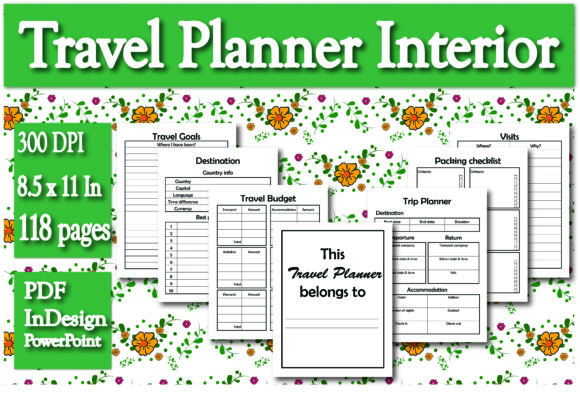
Creating a successful low-content or medium-content book on Amazon KDP requires more than just a generic template; it demands a thoughtful user experience that solves a specific problem for the traveler. This KDP Travel Planner Interior is designed to bridge the gap between functional organization and creative expression. At 8.5 x 11 inches, this 118-page layout provides ample space for detailed planning while maintaining a professional aesthetic that appeals to adult travelers, digital nomads, and adventure seekers. The true value of this resource lies in its flexibility. By providing both InDesign and PowerPoint source files alongside a print-ready PDF, this pack empowers creators to move beyond simple reselling and toward genuine product development.
Strategic Customization with InDesign and PowerPoint
The inclusion of editable source files transforms this from a static product into a foundational asset for your publishing business. While the ready-to-upload PDF allows for immediate listing, the InDesign and PowerPoint files are where long-term brand building happens. For marketers and entrepreneurs, this means you can adapt the interior to fit specific micro-niches without hiring a designer for every iteration.
Consider the difference between a general travel planner and one tailored for a specific audience. Using the editable files, you could modify the "Destination Country Info" section to focus specifically on national park regulations for hikers, or adjust the "Travel Budget" tracker to include currency conversion tables for international backpackers. PowerPoint offers an accessible entry point for quick text changes, font swaps, or color adjustments to match a seasonal theme. InDesign provides professional-grade control for restructuring grids, adding custom illustrations, or completely overhauling the typography. This dual-format approach ensures that whether you are a seasoned graphic designer or a freelancer managing multiple SKUs, you have the right tool for the level of customization required.
Breaking Down the 118-Page User Journey
A high-quality planner guides the user through a logical narrative arc. This interior is structured to support the entire lifecycle of a trip, preventing the disjointed feeling common in poorly organized journals. Understanding how these sections work together helps you write better book descriptions and market the product effectively to potential buyers who value organization.
- Identity and Ownership: The “This Travel Planner belongs to” page is more than a formality; it establishes a personal connection immediately. For creators, this is an opportunity to add branding elements or inspirational quotes that set the tone for the rest of the book.
- Aspirational Planning: The “Travel Goals” section, featuring “Where I have been” and “Where I want to go,” taps into the emotional side of travel. This visual tracking encourages users to engage with the book even before they have booked a ticket, increasing perceived value.
- Destination Research: Dedicated pages for country info and best places to visit turn the planner into a hybrid journal-guidebook. This reduces the need for users to carry separate notebooks for research and logistics.
- Logistical Framework: The Trip Planner section covering departure, return, and accommodation details serves as the operational backbone. Keeping this distinct from the experiential sections prevents clutter and makes critical information easy to find during transit.
- Financial Management: A dedicated Travel Budget tracker addresses one of the biggest pain points for travelers. By integrating this directly into the planner, you provide a practical utility that justifies the purchase price.
- Experiential Tracking: The packing checklist, visits log (where/why), and activities tracker (what/where) shift the focus from mere scheduling to mindful experiencing. These prompts encourage users to reflect on their journey rather than just documenting movement.
Niche Adaptation Strategies for Diverse Audiences
The versatility of this KDP Travel Planner Interior allows it to serve as a base for various specialized products. Rather than competing in the saturated "general travel" category, use the editable files to pivot toward underserved segments. Educators and study-abroad coordinators could adapt the "Activities" and "Visits" sections to include learning objectives and cultural reflection prompts, transforming a standard planner into an academic field journal.
For bloggers and influencers, the layout can be modified to include content creation checklists, photo shot lists, or social media caption drafting areas within the daily logs. Small business owners in the tourism sector might use this as a branded lead magnet or client gift, customizing the "Best Places to Visit" section to highlight their own services or local partnerships. Freelancers and remote workers could expand the accommodation section to include Wi-Fi speed ratings and workspace reviews, catering to the growing work-from-anywhere demographic. Each adaptation creates a unique selling proposition that distinguishes your book from competitors using unmodified templates.
Maintaining Design Integrity During Modification
When customizing the InDesign or PowerPoint files, maintaining visual consistency is crucial for a professional result. The original 8.5 x 11 inch format was chosen for its balance of portability and writing space. If you add new elements, ensure they respect the existing margins and gutter safety zones to prevent content from being trimmed during printing. Consistency in typography hierarchy and spacing creates a subconscious sense of quality for the user.
If you alter the "Packing Checklist" or "Budget" tables, test the usability by printing a sample page. Ensure there is enough physical space for handwriting, as digital readability does not always translate to analog utility. Avoid overcrowding pages with too many prompts; white space is essential for reducing cognitive load during stressful travel moments. When adding your own creative touches, such as custom headers or decorative elements, keep them subtle enough that they do not distract from the planner’s primary function. The goal is to enhance usability, not to showcase design skills at the expense of the user experience.
Practical Applications Beyond KDP Publishing
While optimized for Amazon KDP, the assets in this pack have applications across multiple platforms and business models. The PDF file can be sold directly as a digital download on Etsy or Gumroad for customers who prefer tablet-based planning with apps like GoodNotes or Notability. In this context, you might create hyperlinked versions or offer multiple colorway variations derived from the master InDesign file.
Content creators and coaches can use specific pages as standalone worksheets or lead magnets to build email lists. A "Travel Goals" worksheet extracted from the full planner serves as an excellent freebie to attract subscribers interested in lifestyle design. Corporate retreat organizers might utilize the group-friendly aspects of the itinerary and activity trackers to facilitate team-building events. By viewing this interior as a modular system rather than a fixed book, you unlock revenue streams and marketing opportunities that extend far beyond traditional self-publishing. The key is to remain user-centric, ensuring that any adaptation or repurposing continues to solve real organizational challenges for the traveler.