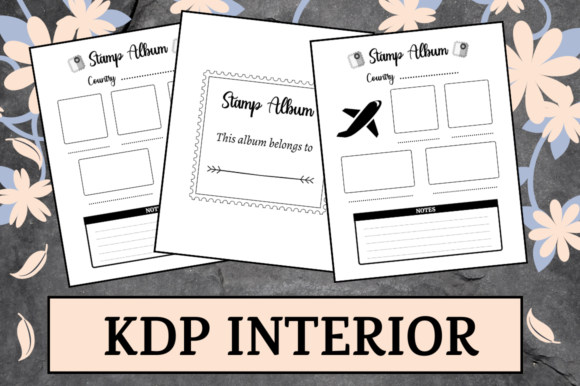
Streamlining Philatelic Publishing: The Strategic Value of a Pre-Formatted Stamp Album KDP Interior
The landscape of self-publishing has evolved significantly over the last decade, moving beyond simple text-based novels into highly specialized niche markets. For entrepreneurs, freelancers, and creative professionals operating within the low and no-content book sector, success is no longer defined solely by volume but by precision, quality, and adherence to platform standards. Among the myriad of niches available to modern publishers, philately remains a steadfast category with a dedicated, high-value audience. However, creating functional books for collectors presents unique technical challenges. This is where a professionally designed Stamp Album KDP Interior becomes an essential asset for business scalability and product excellence.
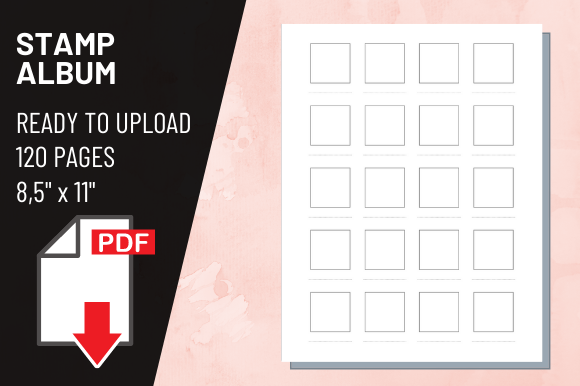
A Stamp Album KDP Interior is not merely a collection of blank pages; it is a purpose-built digital template engineered specifically for Amazon’s print-on-demand infrastructure. Designed for creators who wish to enter the collectibles market without spending hundreds of hours on graphic design or formatting, this resource bridges the gap between creative intent and technical compliance. With a trim size of 8 x 10 inches and a strict no-bleed configuration, these interiors address the specific spatial requirements of stamp mounting while ensuring that the final physical product meets professional publishing standards.
The Intersection of Niche Collecting and Digital Efficiency
To understand the relevance of pre-formatted interiors, one must first recognize the shifting dynamics of the collector economy. Philately is experiencing a renaissance driven by younger demographics interested in tangible history, as well as established collectors seeking better organization for their archives. Unlike general journals or notebooks, stamp albums require structural integrity. Margins must account for hinge placement, paper weight must support adhesive without bleed-through, and page layouts must offer visual balance between empty space and designated mounting areas.
For the independent publisher, designing these parameters from scratch is a significant barrier to entry. The learning curve associated with setting safe zones, gutter margins, and bleed settings in software like Adobe InDesign or Affinity Publisher can be steep. A tested Stamp Album KDP Interior eliminates this friction. By providing a file that is already formatted and verified for KDP, creators can bypass the trial-and-error phase of production. This shift allows marketers and entrepreneurs to focus their energy on keyword research, cover design, and audience targeting rather than troubleshooting PDF export errors.
Technical Precision as a Competitive Advantage
In the current marketplace, consumer expectations for print-on-demand products have risen. Buyers are quick to leave negative reviews for books with misaligned content, text running into the binding, or inconsistent spacing. Amazon’s automated review systems are equally unforgiving, frequently rejecting manuscripts that fail to meet precise dimensional criteria. The value proposition of a ready-to-upload interior lies in its reliability.
This specific resource offers 120 pages of content across four distinct variants. This variety is crucial for addressing different segments of the philatelic community. Some collectors prefer minimalist grids for sorting by country, while others require detailed log sections for catalog numbers, acquisition dates, and valuation notes. By including multiple layout options within a single package, publishers can create a diverse product line or a comprehensive all-in-one album that appeals to a broader spectrum of users. The 8 x 10 trim size is particularly strategic; it offers ample surface area for displaying stamps without being unwieldy, striking the ideal balance between portability and presentation.
Adapting to Modern Creator Workflows
The rise of the solopreneur has necessitated tools that streamline production without sacrificing quality. Time is the most limited resource for freelancers and side-hustlers managing multiple income streams. The traditional workflow of hiring a freelance formatter for every new title is cost-prohibitive for low-content books, yet doing it manually is time-prohibitive. A pre-made Stamp Album KDP Interior represents a hybrid solution that aligns with modern agile business practices.
This efficiency extends beyond mere time savings. It also standardizes quality across a portfolio. When a creator uses a tested template, they establish a baseline of consistency that builds brand trust. Customers who purchase one album and find the printing quality excellent are more likely to return for future volumes or related titles. Furthermore, because these files are provided in PDF format—the industry standard for fixed-layout printing—they ensure compatibility across various devices and operating systems, removing software dependency from the creator's workflow.
The Importance of No-Bleed Configuration
One of the most critical technical aspects of this interior is the no-bleed specification. In book manufacturing, "bleed" refers to artwork that extends to the very edge of the trimmed page. While aesthetically pleasing for photo books, bleed is often unnecessary and risky for functional albums where content must remain within safe margins to avoid being trimmed off during binding. For stamp albums specifically, keeping content away from the edges ensures that mounting spaces are never compromised by manufacturing tolerances.
By utilizing a no-bleed 8 x 10 template, publishers mitigate the risk of rejection during the upload process. Amazon KDP’s previewer tool rigorously checks for elements extending outside safe zones. A pre-validated file passes these checks instantly, accelerating the time-to-market. This technical foresight demonstrates an understanding of both the platform’s limitations and the end-user’s needs, reinforcing the concept that helpful content is inherently user-centric.
Market Relevance and Consumer Trends
The demand for specialized organizational tools correlates with broader lifestyle trends emphasizing mindfulness, analog hobbies, and personal archiving. As digital fatigue grows, activities that require tactile engagement and focused attention are seeing increased participation. Stamp collecting fits perfectly into this wellness-oriented narrative, offering a meditative practice of sorting, categorizing, and preserving.
Publishers who utilize a high-quality Stamp Album KDP Interior are effectively tapping into this cultural moment. They are not just selling paper; they are facilitating a lifestyle. The inclusion of four different variants acknowledges that there is no single "correct" way to collect. Modern consumers value customization and choice. Whether a buyer is a novice starting a general world collection or a specialist focusing on a specific era, having varied internal layouts increases the perceived value of the book.
Moreover, the 120-page count is optimized for both usability and pricing strategy. It provides substantial capacity for a serious collector while keeping the spine width sufficient for legible text and shelf presence. Books that are too thin often appear insubstantial to buyers browsing physically or looking at thumbnail images online, while excessively thick books can drive up printing costs and reduce profit margins. This specific page count represents a data-informed sweet spot for the category.
Strategic Implementation for Business Growth
For professionals and marketers, integrating pre-formatted interiors into a business model enables rapid iteration and testing. Instead of investing months developing a single perfect product, creators can launch multiple variations to gauge market response. Does the grid-heavy variant outsell the log-book style? Do customers respond better to specific terminology in the headers? The ability to deploy tested assets quickly allows for real-time market research.
- Scalability: Reduce production time per unit from weeks to hours, allowing for portfolio expansion.
- Risk Mitigation: Eliminate formatting errors that lead to rejected uploads or poor customer experiences.
- Niche Authority: Establish credibility by offering products that demonstrate an understanding of philatelic standards.
- Cost Efficiency: Avoid recurring design fees and software subscription costs associated with custom layout creation.
Furthermore, these interiors serve as excellent foundations for bundling strategies. A creator might pair a stamp album with a complementary guide to stamp identification or a collector’s checklist, creating a higher-value ecosystem. Because the interior is standardized, cross-promotion feels cohesive rather than disjointed. This holistic approach to product development mirrors successful strategies seen in larger publishing houses, adapted here for the independent creator economy.
Future-Proofing Through Quality Standards
As AI-generated content floods the marketplace, human curation and technical excellence are becoming key differentiators. Amazon and other platforms are increasingly prioritizing books that offer genuine utility and superior user experience over mass-produced, low-effort content. Utilizing a professionally crafted Stamp Album KDP Interior signals a commitment to quality that algorithms and human reviewers alike are beginning to favor.
The forward-looking publisher understands that sustainability in self-publishing comes from building assets that endure. A well-designed template is evergreen; it does not become obsolete with changing trends because the fundamental mechanics of stamp collecting remain constant. By anchoring a business in functional, high-standard resources, creators build a resilient foundation capable of weathering market fluctuations and platform policy updates.
Ultimately, the decision to use a pre-formatted, tested interior is a strategic business calculation. It reflects a mature understanding of the intersection between creative passion and operational reality. For those serious about serving the philatelic community through print-on-demand, leveraging specialized tools is not a shortcut—it is a standard of professional practice that respects both the craft of bookmaking and the dedication of the collector.