Designing an Effective Undated Daily Planner KDP Interior for Modern Productivity
The landscape of personal organization has shifted significantly toward flexible, user-centric tools that adapt to individual workflows rather than forcing users into rigid temporal structures. At the heart of this movement is the undated daily planner KDP interior, a format that prioritizes functionality and longevity over pre-printed calendars. For creators, professionals, and educators utilizing Amazon’s Kindle Direct Publishing platform or seeking printable resources, understanding the anatomy of a high-quality planner layout is essential. A well-executed design does not merely provide blank space; it offers a cognitive framework that guides the user through intention setting, task execution, and reflection without the pressure of wasted pages during periods of inactivity.
The Strategic Advantage of Undated Flexibility
Traditional dated planners often create a psychological burden known as "planner guilt." When a user misses several days due to travel, illness, or shifting priorities, the empty dated pages serve as a visual reminder of perceived failure. An undated format eliminates this friction entirely. By removing specific calendar dates from the core daily spread, the tool becomes evergreen. This characteristic is particularly valuable for niche audiences such as researchers conducting fieldwork, teachers managing academic terms with breaks, or entrepreneurs whose schedules do not align with the standard Monday-to-Friday business week.
From a publishing and product development perspective, the undated model extends the shelf life of the inventory. Unlike dated planners that become obsolete on January 1st, an undated daily planner KDP interior remains relevant year-round. This sustainability aspect appeals to eco-conscious consumers and business owners looking to minimize waste. Furthermore, for those purchasing editable PDF files for personal printing, the undated nature allows for unlimited reproduction and customization, making it a cost-effective solution for long-term habit tracking and project management.
Anatomy of a High-Functioning 6x9 Layout
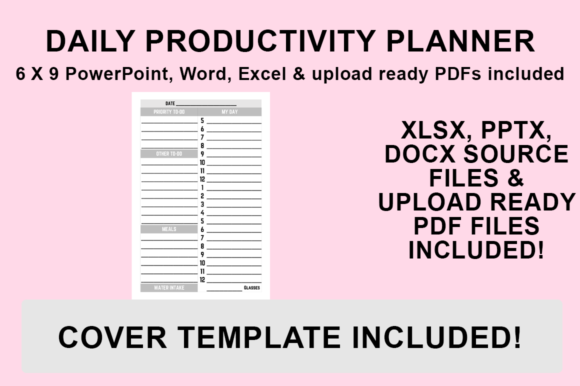
Size dictates utility in the world of analog planning. The 6x9 inch trim size has emerged as the industry standard for portable productivity because it strikes an optimal balance between writing surface area and carry convenience. It fits comfortably in most handbags, backpacks, and even large coat pockets, ensuring the planner is accessible exactly when inspiration or tasks arise. However, designing for this compact footprint requires meticulous spatial management to prevent clutter while maintaining comprehensive functionality.
A superior interior design maximizes every square inch without inducing visual overwhelm. The 110-page count common in these formats provides approximately three to four months of daily tracking, which is sufficient for establishing new habits or completing quarterly goals without making the physical book too heavy or cumbersome. Crucially, the specification of "no bleed" paper considerations ensures that users can employ various writing instruments, from ballpoints to light markers, without compromising the integrity of the reverse side. This technical detail is vital for user satisfaction, as bleed-through is one of the primary complaints in low-content book reviews.
Cognitive Scaffolding Through Structured Sections
Blank notebooks require significant executive function to organize effectively. In contrast, a structured daily planner acts as external scaffolding for the brain. The inclusion of specific sections transforms a simple notebook into a proactive management system. Understanding why each section exists helps users leverage them more effectively:
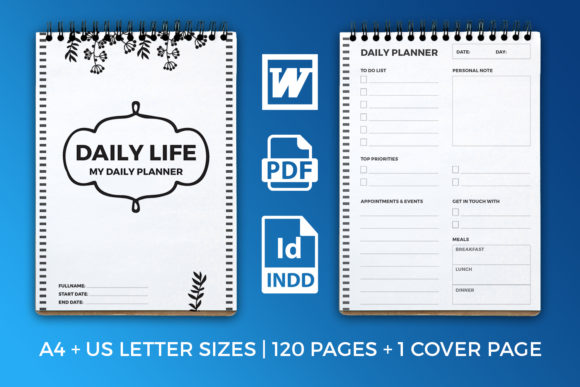
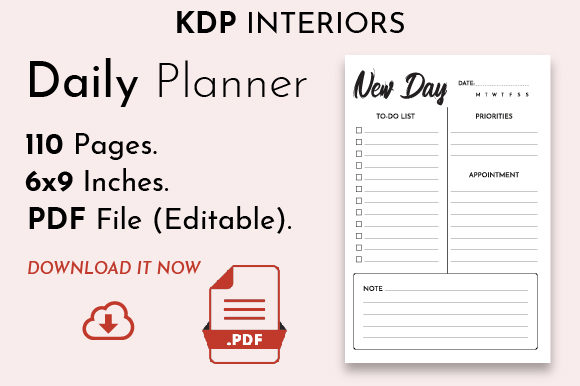
- Daily Top 3 Priorities: This section combats decision fatigue and the paradox of choice. By limiting high-impact tasks to three items, users are forced to distinguish between urgent noise and genuine progress. Psychologically, completing these three items creates a sense of accomplishment regardless of how many smaller tasks remain unfinished.
- Daily To-Do List: While priorities capture strategy, the to-do list captures logistics. This space is for the tactical execution of the day, including emails, errands, and administrative duties. Separating this from priorities prevents critical strategic work from being buried under a mountain of minor tasks.
- Daily Appointments: Time-blocking is a proven method for realistic scheduling. A dedicated appointment section encourages users to assign temporal boundaries to their commitments, reducing the likelihood of overbooking and helping to visualize the flow of the day alongside the task list.
- Notes Section: Cognitive load theory suggests that holding unprocessed information in working memory reduces processing power. A dedicated notes area serves as a capture mechanism for fleeting ideas, phone numbers, or reminders that do not fit neatly into tasks or appointments, allowing the brain to return to focused work immediately.
- Date Entry Field: Though undated, the manual act of writing the date serves as a mindfulness ritual. It marks the transition into the planning session and reinforces temporal awareness, grounding the user in the present moment before they begin organizing their future actions.
Applications Across Diverse Professional Landscapes
The versatility of a minimalist, high-quality planner design allows it to serve distinct functions across different demographics. Recognizing these varied use cases enhances the value proposition for both creators designing interiors and consumers selecting the right tool.
For Educators and Researchers: Academic workflows are rarely linear. Teachers often need to track lesson plans, grading, and student meetings simultaneously. The undated format accommodates school holidays and semester breaks naturally. Researchers benefit from the notes section for capturing observations during experiments or literature reviews, while the top three priorities help maintain focus on long-term publication goals amidst daily teaching responsibilities.
For Business Owners and Freelancers: Entrepreneurs often juggle multiple roles within a single day. The separation of appointments and to-do lists is critical for distinguishing client-facing time from deep work blocks. The 6x9 size makes it an ideal companion for coffee shop meetings or co-working spaces, projecting professionalism while maintaining personal organization. The editable PDF option is particularly advantageous here, allowing business owners to print fresh copies for each quarter or customize headers to match their branding.
For Health Professionals and Caregivers: In high-stakes environments, clarity is safety. Nurses, therapists, and caregivers utilize the appointment section for patient rounds or medication schedules, while the notes section tracks symptoms, behavioral changes, or handoff information. The undated nature respects the unpredictable rhythm of care work, where shifts may vary and traditional weekly spreads often fail to capture the reality of rotating schedules.
Leveraging Editable PDF Formats for Customization
The availability of an editable PDF file represents a significant evolution in digital-to-analog planning. Unlike static KDP interiors intended solely for commercial publishing, editable files empower the end-user to become a co-designer. This capability addresses the limitation of mass-market products by allowing for personalization that reflects individual cognitive styles.
Users can modify font sizes for better readability, adjust section proportions based on their specific ratio of meetings versus tasks, or add specialized trackers for water intake, mood, or billable hours. For small business owners creating branded merchandise or corporate wellness gifts, the editable format provides a foundation that can be adapted without requiring advanced graphic design skills. This flexibility ensures that the planner remains a living document that evolves alongside the user’s changing needs, rather than a static artifact that becomes obsolete as workflows shift.
Visual Hierarchy and Minimalist Design Principles
A "stylish design" in the context of productivity tools is synonymous with functional clarity. High-quality interiors employ strong visual hierarchy to guide the eye naturally through the page. Heavy lines separate major sections, while lighter rules define writing spaces. Ample white space is not wasted space; it is breathing room that reduces cognitive strain and improves legibility.
Minimalism in planner design also supports neurodivergent users who may be sensitive to visual clutter. A clean, distraction-free layout helps maintain focus and reduces anxiety associated with complex organizational systems. The aesthetic appeal of a well-designed interior also plays a role in adherence; users are statistically more likely to consistently use a tool they find visually pleasing. Therefore, the investment in high-quality typography and balanced composition directly correlates to the long-term effectiveness of the planning system.
Integrating Analog Planning Into Digital Workflows
In an era dominated by digital apps, the persistence of paper planning speaks to unique cognitive benefits. Writing by hand engages motor memory and improves retention compared to typing. However, the most effective modern systems often integrate both modalities. The undated daily planner serves as the daily command center for immediate action and cognitive offloading, while digital tools handle long-term storage, searchability, and collaboration.
The notes section of the 6x9 planner often acts as a triage point. Information captured here during the day can be processed and migrated to digital project management platforms like Notion, Trello, or Asana during an evening review. This hybrid approach leverages the tactile benefits of paper for focus and the scalability of software for archiving. The undated format facilitates this integration seamlessly, as the lack of pre-printed dates makes it easier to reference specific entries digitally without conflicting with automated calendar systems.
Considerations for Sustainable Usage Habits
Acquiring a high-quality planner is only the first step; sustainable usage requires intentional habit formation. The structure of the undated daily planner KDP interior supports this through its repetitive yet flexible layout. Consistency in page design reduces the friction of starting each day. Users do not need to relearn the system daily; the muscle memory of filling out priorities, appointments, and tasks develops quickly.
However, users must also grant themselves permission to use the tool imperfectly. The undated nature inherently supports this mindset. Skipping weeks does not ruin the book. Messy handwriting does not invalidate the planning process. The goal is functional organization, not aesthetic perfection. By viewing the planner as a working instrument rather than a precious artifact, users unlock its true potential as a catalyst for productivity and mental clarity. Whether used for managing a household, running a business, or navigating academic research, the combination of thoughtful design, appropriate sizing, and structural flexibility makes this format a cornerstone of effective personal management.