KDP Interior Daily Productivity Planner: Strategic Customization for Publishers and Professionals
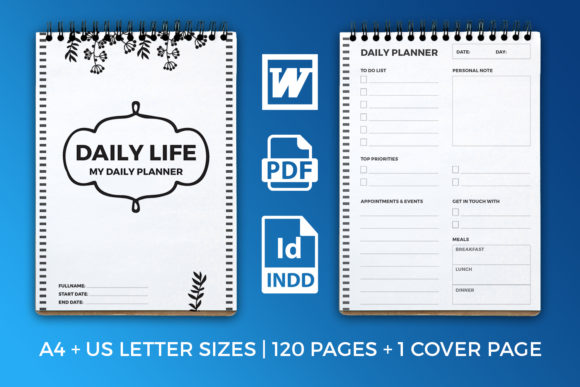
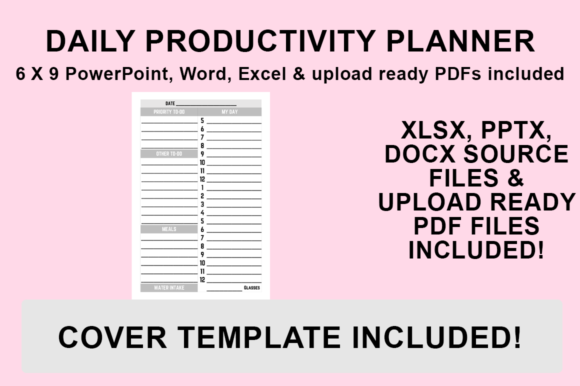
The KDP Interior Daily Productivity Planner represents more than a simple low-content book template; it is a strategic asset for publishers, entrepreneurs, and professionals seeking to establish authority in the planning niche. Unlike generic templates that flood the marketplace, this resource provides editable source files in PowerPoint, Word, and Excel, allowing for deep customization that aligns with specific brand identities and audience needs. The inclusion of a print-ready PDF ensures immediate deployment, while the editable formats serve as a foundation for long-term product development. For decision-makers and creators, the value lies not merely in the file itself, but in the ability to modify layout, typography, and functionality to solve distinct user problems.
Success in the digital publishing space requires moving beyond saturation and toward specificity. A daily productivity planner designed in familiar software ecosystems lowers the technical barrier to entry, enabling users to focus on content strategy rather than complex design software. Whether you are an educator creating classroom management tools, a freelancer designing client onboarding packets, or a KDP publisher building a cohesive series, the adaptability of these files transforms a static interior into a dynamic business tool. Understanding how to leverage this flexibility intentionally is what separates profitable assets from forgotten uploads.
Strategic Positioning Through Intentional Design
The primary advantage of having access to PowerPoint, Word, and Excel source files is the capacity for strategic differentiation. In a marketplace where many planners share identical layouts, your ability to adjust margins, add proprietary graphics, and restructure tracking sections determines your product's viability. Thoughtful use of the KDP Interior Daily Productivity Planner involves analyzing your target demographic’s specific friction points before opening the file. If your audience consists of busy executives, they may require hourly blocking and meeting notes sections. Conversely, creative professionals might prioritize unstructured brainstorming space over rigid time slots.
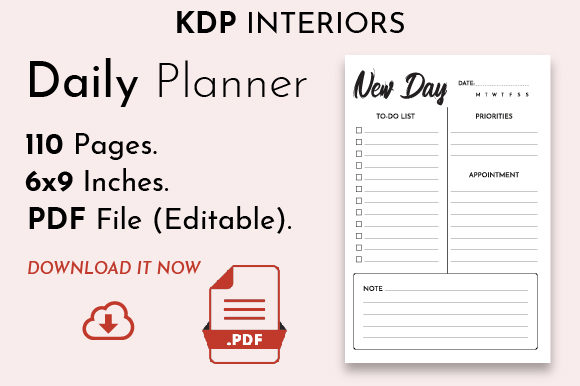
Customization should always serve a functional purpose. Changing fonts and adding graphics is necessary for branding, but structural changes drive utility. Consider how the 6″x9″ trim size influences user behavior. This portable format suggests mobility and quick reference. Therefore, dense text or complex spreadsheets may be counterproductive. Instead, utilize the Excel integration to create clean, high-contrast tables that remain legible at a smaller scale. Use PowerPoint to layer motivational elements or instructional guides that reinforce the planner’s methodology. Every design choice must answer the question: Does this help the user achieve their desired outcome more efficiently?
Leveraging Multi-Format Flexibility for Better Outcomes
Different stages of product development benefit from different file formats. Understanding when to use each component of the KDP Interior Daily Productivity Planner bundle maximizes efficiency and quality.
- Excel for Data Structure: Use Excel to prototype repetitive elements like habit trackers, budget sheets, or project timelines. Excel ensures mathematical precision and consistent alignment, which can then be copied into other formats. This is crucial for planners focused on finance, fitness metrics, or academic grading.
- Word for Text-Heavy Layouts: When your planner includes substantial journaling prompts, instructional content, or reflective questions, Word offers superior typographic control. It allows for precise paragraph styling and easy bulk editing of recurring text elements.
- PowerPoint for Visual Composition: PowerPoint serves as the ideal assembly environment for combining text, tables, and graphics. Its slide-based interface mirrors the page-by-page nature of book interiors, making it intuitive for arranging visual hierarchy and ensuring elements stay within safe zones.
By utilizing the appropriate tool for each task, you maintain professional standards without requiring advanced graphic design skills. This workflow supports better decision-making by allowing rapid iteration. You can test three different weekly spread variations in PowerPoint within an hour, gather feedback, and finalize the best option before committing to a full manuscript.
Operational Excellence and Brand Consistency
For small business owners and marketers, the KDP Interior Daily Productivity Planner functions as an extension of brand operations. A planner is often a daily touchpoint with your audience; therefore, it must reflect your broader visual identity and messaging. The editable nature of these files allows you to integrate logos, color palettes, and proprietary frameworks seamlessly. This consistency reinforces brand recall and positions the planner as a premium companion to your courses, coaching services, or digital products.
Beyond external branding, these planners support internal operational clarity. Entrepreneurs can customize the interior for team use, creating standardized reporting tools or project management logs that align with company workflows. Educators can adapt the template into lesson planners or student progress trackers that meet specific curriculum requirements. In these contexts, the planner ceases to be a commodity and becomes a specialized operational instrument. The key is to approach customization with a clear understanding of the end-user’s workflow. Avoid adding features simply because they are possible; include them only if they reduce cognitive load or enhance accountability.
Risks of Unfocused Customization
While editability is a strength, it introduces the risk of scope creep and design inconsistency. Without clear goals, users often overcomplicate interiors, resulting in cluttered pages that fail to print well or confuse the user. Common pitfalls include using low-resolution graphics that appear pixelated in print, selecting decorative fonts that sacrifice readability, or ignoring the 6″x9″ no-bleed constraints. These errors undermine perceived value and lead to negative reviews.
Another significant risk is losing sight of the "no bleed" specification. Since all included files are sized to fit 6″x9″ with no bleed, critical content must remain within safe margins. Placing text or graphics too close to the gutter or outer edge will result in trimming issues during production. Always verify margin settings after making modifications. Additionally, avoid relying solely on screen preview; colors and contrast often shift in print. Strategic planning includes ordering a proof copy to validate that your customizations translate effectively to physical media.
Technical Execution: Exporting for KDP Compliance
Proper file preparation is the final step in ensuring your KDP Interior Daily Productivity Planner meets platform standards. Even the most beautifully designed interior will be rejected or printed poorly if exported incorrectly. Follow this precise workflow to generate a compliant, upload-ready PDF.
- Finalize Your Customizations: Open your desired source file (PowerPoint, Word, or Excel) and complete all edits. Verify font embedding permissions, check image resolution (minimum 300 DPI), and confirm that all elements respect the no-bleed safe zone.
- Navigate to Save Options: Go to ‘File’ and select ‘Save As’. Do not use ‘Export’ unless necessary, as ‘Save As’ typically offers more granular PDF configuration options in Office applications.
- Select Destination: Choose a dedicated project folder to save your PDF file. Maintaining organized version control prevents accidental uploads of draft versions.
- Configure PDF Settings: From the ‘Save as type’ dropdown, select PDF (.pdf). Before clicking save, review any available PDF options. Ensure the output is optimized for print (not online viewing) and that fonts are embedded. If using PowerPoint, verify that slide size matches 6″x9″ exactly.
- Generate and Validate: Click Save. Once generated, open the PDF in a dedicated reader (not just the browser) to inspect pagination, margins, and overall quality. Confirm the page count matches your intended specifications before uploading to KDP.
This systematic approach minimizes technical errors and streamlines the publishing process. Remember that KDP’s automated review checks for trim size, bleed settings, and margin violations. By adhering to these export protocols, you reduce rejection rates and accelerate time-to-market.
Making Informed Decisions for Long-Term Value
Acquiring a KDP Interior Daily Productivity Planner template is a tactical decision; using it effectively is a strategic one. Before customizing, define success metrics. Are you aiming for volume sales through broad appeal, or higher margins through niche specialization? Is this planner a standalone revenue stream or a lead magnet for a larger ecosystem? Your answers dictate design complexity, pricing strategy, and marketing efforts.
Consider the lifecycle of your product. Trends in productivity shift rapidly. The ability to update interiors seasonally or annually extends the asset’s relevance. Use the source files to create dated versions for specific years or undated evergreen variants that sell continuously. Test different cover designs paired with the same customized interior to identify winning combinations. Gather user feedback through reviews or direct engagement and iterate on future versions accordingly.
Ultimately, the KDP Interior Daily Productivity Planner empowers you to act as a product designer rather than just a reseller. By combining technical accessibility with strategic intent, you create resources that genuinely serve users while building sustainable publishing assets. Focus on solving real problems, maintain rigorous quality standards, and let thoughtful customization drive your competitive advantage in an evolving marketplace.