Evaluating the Security Log Book KDP Interior for Low Content Publishing
Selecting the right interior template is often the most critical decision in low content publishing. For creators focusing on niche functional books, a Security Log Book KDP Interior offers a specific utility that general-purpose notebooks cannot match. This specialized format is designed to record incidents, visitor entries, patrol checks, and key handovers in a structured manner. Unlike generic lined journals, this interior provides pre-formatted tables and headers that add immediate value for security professionals, property managers, and small business owners. Understanding the distinct characteristics of this asset helps determine if it aligns with your current publishing portfolio or market research goals.
Defining the Functional Scope and Structure
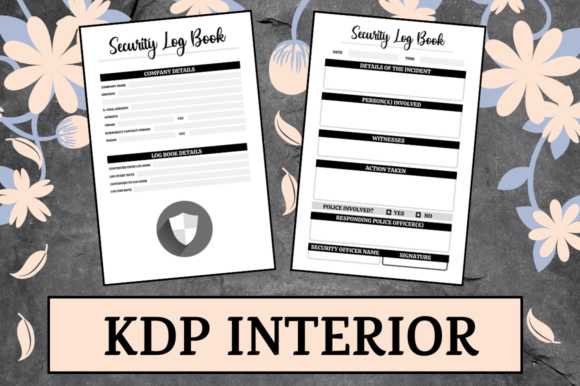
A high-quality Security Log Book KDP Interior is defined by its adherence to industry-standard logging practices. It is not merely a collection of lines; it is a data capture tool. The specific product configuration discussed here includes 120 pages formatted for a 6 x 9 trim size with no bleed. This dimension is significant because it balances portability with sufficient writing space. Security personnel often need to carry logs while patrolling or standing at a post, making the 6 x 9 form factor superior to larger 8.5 x 11 formats for mobile use, yet more practical than pocket-sized 4 x 6 options that lack room for detailed incident descriptions.
The inclusion of three different PDF variants within this package addresses a common pain point in low content creation: market saturation through uniformity. Having multiple layout options allows publishers to test different column configurations or header styles without redesigning from scratch. One variant might focus on hourly patrol checks, another on visitor sign-ins, and a third on general incident reporting. This flexibility enables the creation of distinct listings that serve slightly different user intents, reducing the risk of having all inventory compete for the exact same long-tail keywords.
Technical Specifications and Print Readiness
For those evaluating this resource against creating their own interiors, technical compliance is a primary consideration. This Security Log Book KDP Interior is marketed as "ready for upload," implying strict adherence to Amazon’s printing specifications. Key technical attributes include:
- No Bleed Configuration: Essential for log books where margins must remain consistent to prevent text from being trimmed off during binding.
- 120 Page Count: A standard spine width threshold that ensures the book looks substantial enough for professional use without significantly increasing printing costs.
- Tested Formatting: Pre-validated files reduce the rejection rate during the KDP review process, saving time on troubleshooting margin errors or font embedding issues.
When comparing this to DIY alternatives, the tradeoff is customization versus speed. Creating a custom interior allows for unique branding and proprietary fields, but requires proficiency in design software and knowledge of print-safe zones. Using a pre-formatted Security Log Book KDP Interior sacrifices some uniqueness in exchange for immediate deployment and verified technical accuracy.
Comparative Analysis: Specialized Logs vs. Generic Alternatives
Publishers often debate whether to invest in niche-specific interiors like security logs or stick to broader categories like composition notebooks or daily planners. The decision hinges on understanding the end-user's workflow. Security documentation is legally sensitive and operationally rigid. A generic planner lacks the necessary columns for "Time In/Out," "Badge Number," "Vehicle Description," or "Action Taken." Attempting to force these details into a standard notebook creates friction for the user and reduces the perceived value of the book.
However, specialized interiors come with narrower audience targeting. While a lined journal appeals to students, writers, and office workers, a Security Log Book KDP Interior targets a specific B2B or vocational demographic. This results in lower overall search volume but typically higher conversion rates and potentially better royalty stability due to lower competition. When evaluating this asset, consider whether your business model relies on high-volume trends or steady, niche utility sales. The latter often benefits more from functional interiors.
Evaluating Digital vs. Physical Log Solutions
It is also necessary to compare physical KDP log books against digital alternatives. Many security firms use apps or cloud-based software. However, physical logs remain relevant for several reasons that support the viability of this KDP interior:
- Redundancy: Physical books serve as a backup when technology fails or batteries die.
- Legal Admissibility: Handwritten, bound logs are often preferred in legal disputes as they are harder to alter retroactively compared to digital entries.
- Simplicity: Small businesses, residential complexes, and volunteer organizations may lack the budget or infrastructure for digital systems.
The Security Log Book KDP Interior fits best in these analog-first or hybrid environments. If your target audience consists primarily of large enterprise security firms, they likely have proprietary digital systems. If your research points toward independent contractors, night watchmen, HOAs, or event staff, the physical format remains a primary tool.
Strategic Fit and Decision Factors
Determining if this specific 6 x 9, 120-page interior is the right choice requires an honest assessment of your publishing strategy. Below are scenarios where this resource is advantageous versus situations where alternative approaches may be superior.
When This Interior Is the Right Choice
This Security Log Book KDP Interior is ideal for publishers who have identified a gap in functional documentation for specific security niches. It is particularly effective if you plan to create a series covering related topics, such as parking enforcement logs, guest registration books, or maintenance checklists. The three included variants facilitate this series approach by providing visual consistency while allowing for functional differentiation. Additionally, the no-bleed 6 x 9 format is cost-efficient regarding printing fees, leaving healthy margin room even at competitive price points typical for consumable workbooks.
It is also suitable for those new to low content publishing who want to avoid technical learning curves. Since the files are tested and formatted, the barrier to entry is lowered, allowing focus to shift toward keyword research, cover design, and marketing rather than file troubleshooting.
When to Seek Alternatives
Conversely, this interior may not be appropriate if your goal is to create a premium, high-ticket item. The 6 x 9 size, while portable, is sometimes perceived as less authoritative than larger formats for official government or corporate procurement. If targeting institutional buyers, an 8.5 x 11 format with extensive compliance sections might be necessary. Furthermore, if you already possess advanced design skills and wish to build a defensible brand moat, relying solely on pre-made templates can limit differentiation. In highly saturated sub-niches, unique interior features (such as instructional pages, reference charts, or custom indexing) may be required to stand out, which would necessitate modifying the base template or designing from scratch.
Practical Considerations for Implementation
Successfully leveraging a Security Log Book KDP Interior extends beyond simply uploading the file. The utility of the book depends heavily on how well the cover and metadata communicate its specific application. Because the interior is standardized, the exterior must do the heavy lifting of segmentation. A cover labeled "Security Log" is too broad; "Night Shift Patrol Log for Residential Complex" signals relevance to a specific buyer.
Additionally, users should verify the column headers in all three variants against real-world needs before publishing. Review sample security logs online or consult industry forums to ensure the fields provided match current standards. If the template includes outdated terminology or missing essential columns, it may receive negative reviews despite good print quality. While the interior is ready for printing, it should not be considered immune to market validation. Treating the template as a foundation rather than a finished product often yields better long-term results.
Finally, consider the lifecycle of a consumable security log. These books are used daily and replaced frequently. This repeat purchase potential makes customer satisfaction paramount. Ensuring the paper opacity and binding quality meet expectations is part of the KDP ecosystem, but selecting an interior with adequate spacing and legible fonts contributes directly to user retention. The 120-page count strikes a balance between longevity and portability, typically lasting one to three months depending on shift frequency, which aligns well with quarterly replacement cycles common in facility management.
Ultimately, the Security Log Book KDP Interior serves as a pragmatic solution for publishers targeting the functional documentation niche. By offering a tested, multi-variant, and correctly sized template, it removes technical barriers and accelerates time-to-market. Success depends on pairing this efficient production asset with thorough niche research and precise positioning to reach the professionals who rely on accurate, physical record-keeping in their daily operations.